Slobber and Stitch

Fleece
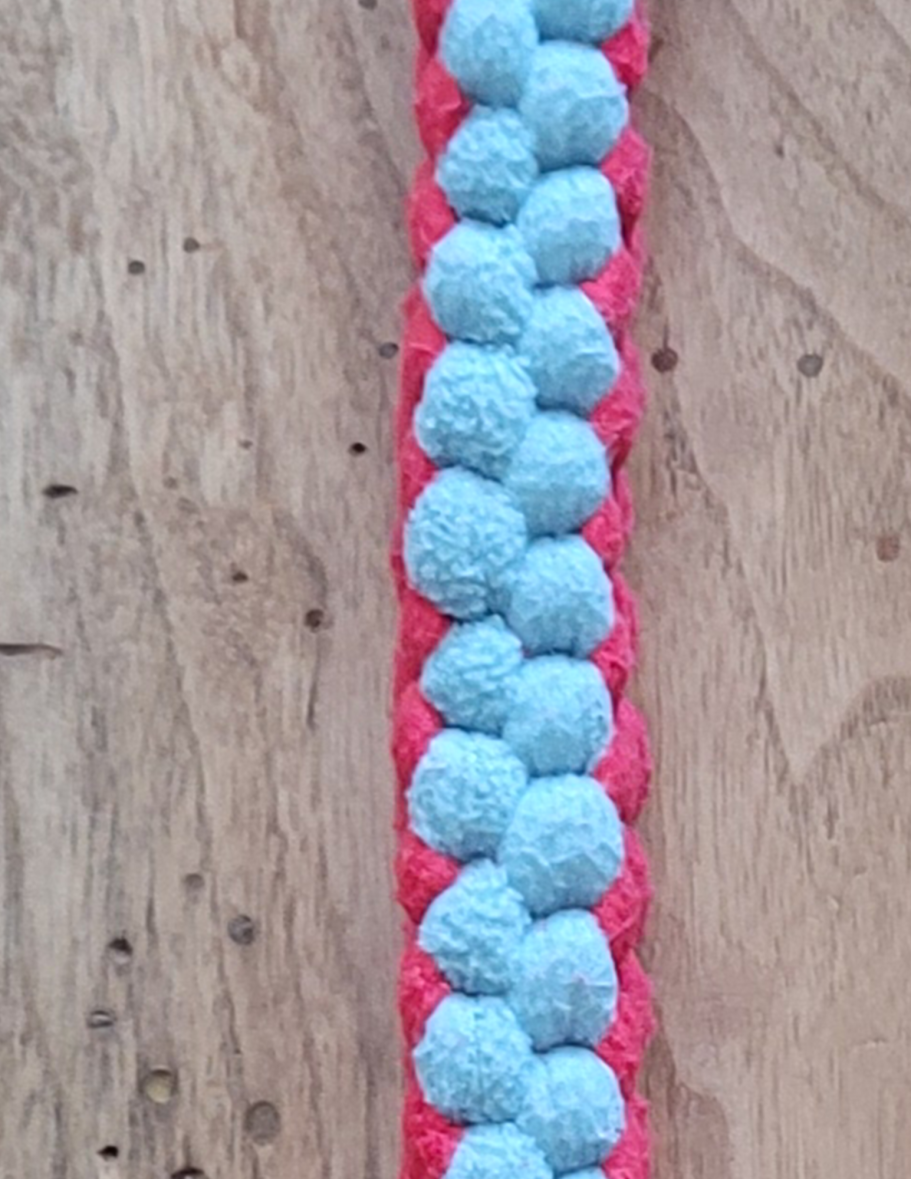

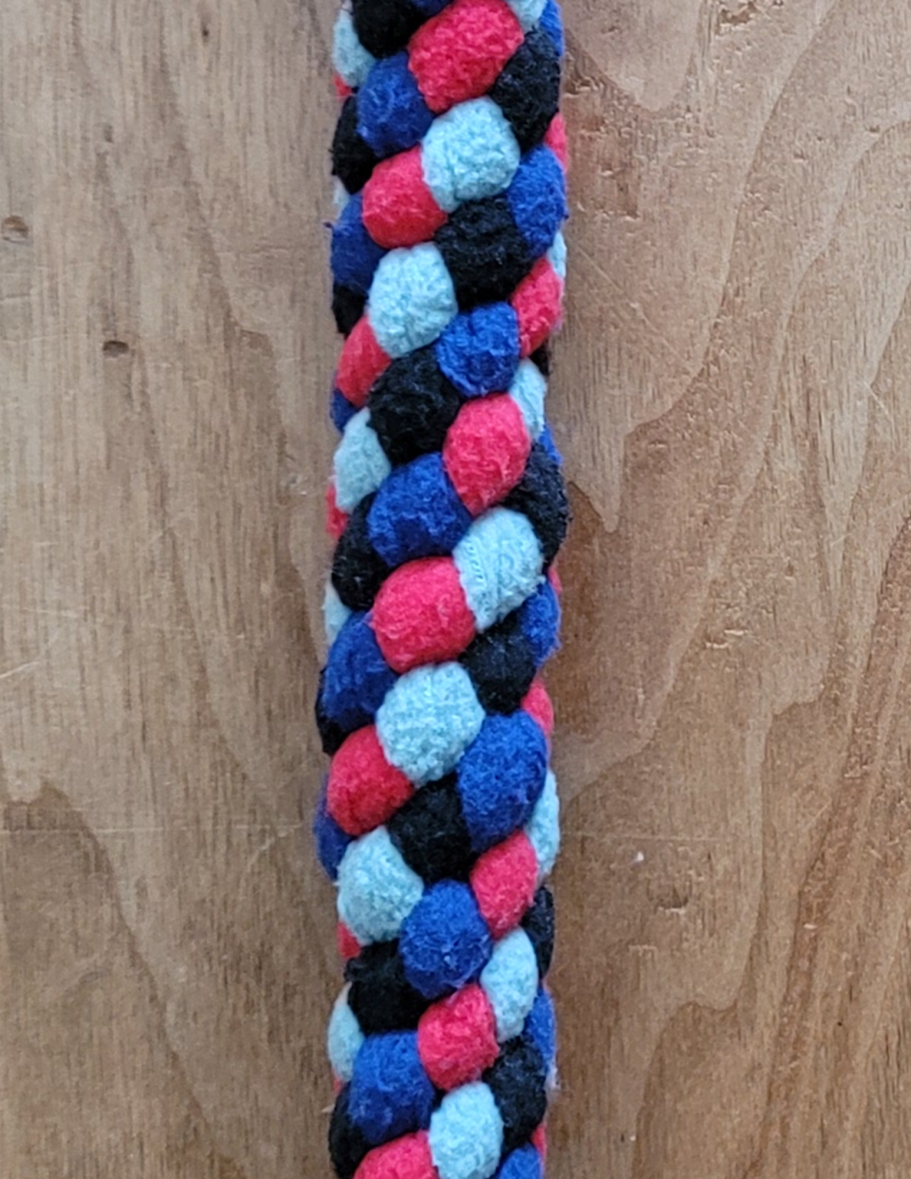
What Is Fleece — And Why We Build With It
What fleece actually is
Fleece is a knit fabric made from polyester (PET), brushed on both faces to raise a soft, lofty surface called the pile. It was developed at Malden Mills in Massachusetts in the late 1970s as a synthetic alternative to wool.
The word that matters most is knit — not woven. That single structural fact shapes almost everything below.
How it's made
Fleece goes through roughly eight stages before it reaches our table:
- Polymer — PET resin is produced from terephthalic acid and ethylene glycol. Much of the fleece on the market today uses recycled PET from bottle stock.
- Extrusion — melted resin is forced through spinnerets into fine continuous filaments.
- Drawing — filaments are stretched to align the molecular structure, which is what gives the fiber its strength.
- Texturizing — the filament is crimped, building in loft.
- Dyeing — yarn is dyed in heated vats before knitting.
- Knitting — a circular knitting machine produces a continuous tube, typically 58–60 inches wide.
- Napping — the fabric passes through hooked rollers that break filaments out of the yarn and raise them into a dense fuzz. This step is what turns a plain knit into fleece.
- Shearing — a blade trims the raised pile to a uniform height.
Why we chose it for tugs
It's a knit, not a woven. A woven rope is built from long parallel threads. When it wears, those threads come free as long threads. A knit is built from interlocking loops instead, so it tends to fail toward short fuzz and pilling. That's a genuine structural difference — and worth stating carefully: different failure geometry isn't the same as safe. Every fabric toy needs supervision, inspection, and retirement at first fraying.
It doesn't absorb water. PET doesn't take water into the fiber the way cotton does. Fleece holds moisture mechanically in the pile and dries fast, so it doesn't get waterlogged or stiffen as it dries the way a cotton rope will.
The fiber is strong. Drawn PET filament resists breaking, which is part of why the pile balls up on the surface rather than shedding away.
It's a soft textile. Categorically different from nylon, hard rubber, or plastic — it's a fabric, and it behaves like one.
It holds a fold. This is the practical one. At 240 GSM, the fleece we use compresses and grips against itself under hand tension. Without that, the fold-and-knot construction our tugs are built on simply wouldn't hold. It's the reason this material and this technique go together.
What we're not claiming
We haven't lab-tested our tugs. We don't know how many pulls one survives, how far it stretches under load, or how it compares to any other toy — and until we've measured those things ourselves, we won't say them.
What's on this page is what fleece is and why we chose it. When we have real numbers, we'll put those here too.